emotions
Key Takeaways
- Emotions are not a distraction from leadership. They are information. Fear, anger, grief, and anxiety all carry signals about what is happening in the business, in relationships, and within the leader themselves.
- Most founders are trained to suppress emotions in professional settings. This does not make the emotions disappear. It drives them underground, where they show up as impaired decision-making, strained relationships, and chronic stress.
- Emotional intelligence is one of the strongest predictors of CEO effectiveness. The ability to recognize, name, and regulate your own emotional state, and to understand the emotions driving your team, directly shapes leadership quality.
- Learning to work with emotions rather than against them is not soft. It is one of the hardest and most strategically important skills a founder can develop.
Why do emotions matter so much for founders?
The founder's emotional state radiates through every part of the organization. A leader who is carrying unprocessed grief will make different decisions than one who has done the work to move through it. A leader who suppresses anger will eventually have it leak out as sarcasm, micromanagement, or explosive conflict. A leader who cannot sit with fear will avoid the hard conversations and the bold moves the company needs most.
Emotions are especially intense in the startup context because the stakes are personal. The company is often fused with the founder's identity, finances, and relationships. When the business is threatened, the founder does not just face a professional problem. They face what feels like an existential one. Learning to navigate painful conclusions with partners and to fill your own cup first are both expressions of emotional leadership in practice.
How founders learn to work with their emotions
The first step is recognition: learning to notice what you are feeling in real time rather than hours or days later. The second is naming: putting language to the emotion, which research shows activates the prefrontal cortex and reduces the intensity of the emotional response. The third is learning to act from a grounded place rather than a reactive one.
This work is not about becoming emotionally neutral. It is about developing the range to feel deeply without being controlled by the feeling. It means understanding why you are not the fire, even when the business feels like it is burning, and learning to shift from a reactive, self-protective stance to a grounded, steady one when it matters most.
If you want to develop a healthier relationship with the emotions that come with leadership, working with a CEO coach can help you build emotional capacity alongside strategic capability.
Frequently Asked Questions About Emotions in Leadership
Should founders show emotion at work?
Yes, within context. Emotional honesty builds trust, and leaders who never show vulnerability create cultures where no one else can either. The key is regulation, not suppression.
A CEO who acknowledges difficulty without being overwhelmed by it models the kind of emotional leadership that high-performing teams need.
What is the most misunderstood emotion for leaders?
Anger. Most founders either suppress it entirely or let it drive impulsive behavior. Neither is effective. Anger often carries important information about boundaries being crossed, values being violated, or needs going unmet.
Learning to read anger as a signal rather than acting on it reflexively is one of the most valuable emotional skills a leader can develop.
How do emotions affect decision-making?
Significantly. Neuroscience research shows that emotions are not separate from rational thought — they are integral to it. Fear narrows attention and promotes risk aversion. Anxiety impairs working memory. Unprocessed grief reduces cognitive flexibility.
A leader who is not aware of their emotional state is making decisions shaped by forces they cannot see.
Can emotional intelligence be developed?
Yes. Emotional intelligence is a set of learnable skills, not a fixed trait. It develops through self-awareness practices, honest feedback, coaching or therapy, and consistent effort over time.
The leaders who invest in emotional development consistently report improvements in their communication, relationships, and decision-making quality.
How do founders process grief and loss while leading a company?
By acknowledging the loss rather than compartmentalizing it, creating space for processing through therapy, journaling, or trusted relationships, and accepting that leadership during grief will be imperfect. Trying to perform normalcy while grieving depletes the exact resources the founder needs most.
Allowing space for the emotion, even in small doses, is what allows a leader to remain present and effective over time.
Articles
What My Daughter's Grief Taught Me About My Own
How tending to our own pain helps us stay present with the people we love.

Sanity Notes #041: The Most Important Voice in the Room
A simple daily practice to actually hear your inner voice.

A Love Letter to Anyone Navigating Loss
I have found myself in many conversations about loss recently. This is an open letter to anyone navigating loss. You are not alone.

Sanity Notes #040: You Are Not the Fire
A reflection on founder identity, burnout, and learning to tend a business without becoming it

Sanity Notes #038: The Freedom That Comes When You Stop Trying to Get It Right
A small moment with my daughter that I wish I could have given my younger founder self

Sanity Notes #037: On becoming the predator
I grew up wired for self-protection. Many founders did. Here’s how we can learn to shift from prey energy to a grounded, steady predator stance when it matters most.

How to navigate painful conclusions with your most trusted partners
There are few things more difficult in partnerships of any kind than sharing a truth you know will break your partner’s heart.
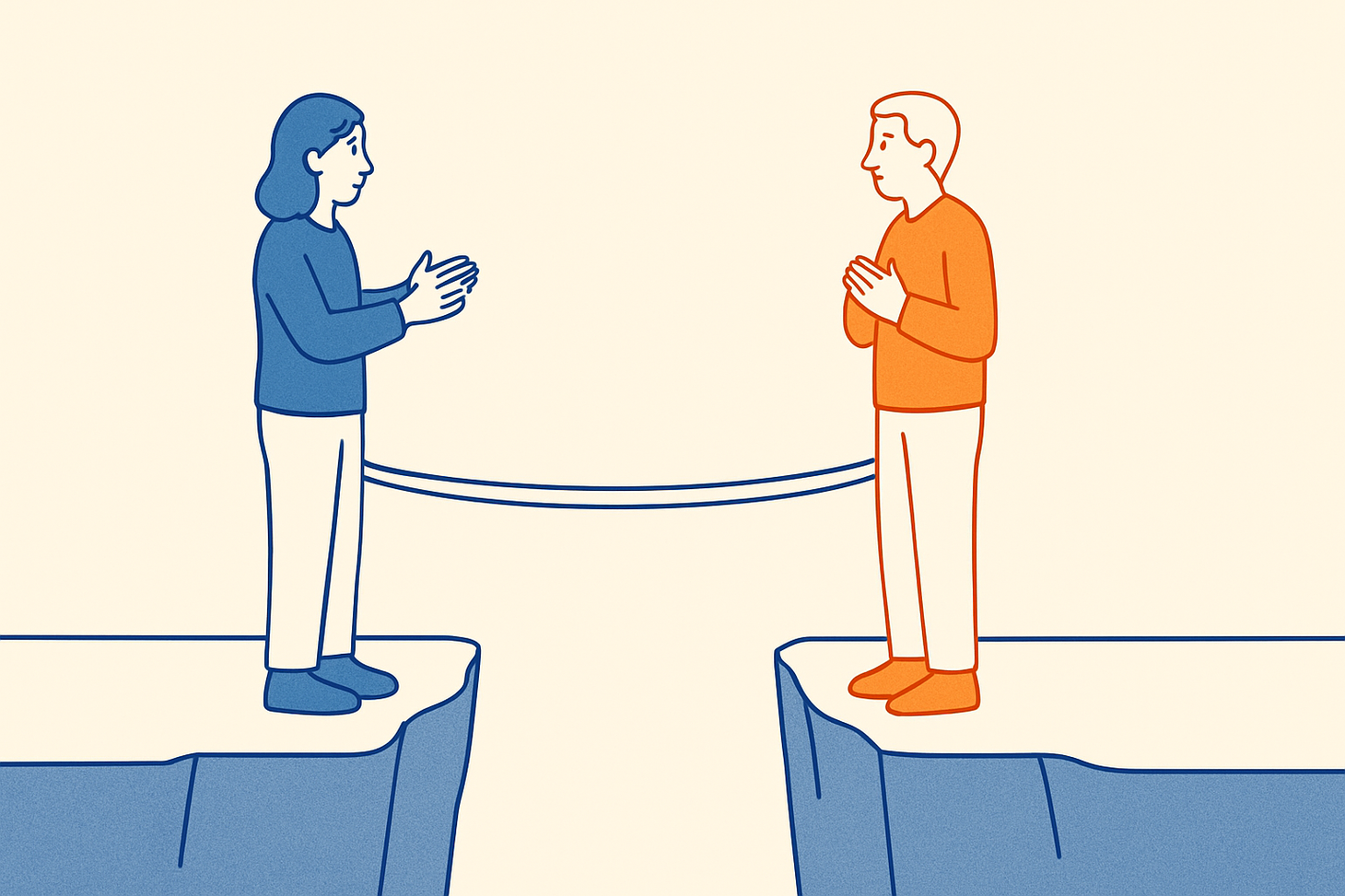
Why is it so hard to fill my own cup first?
As leaders, we are told that we must care for ourselves before we can support others; why is this so challenging?
My journey through founder depression
A look at why depression is so common among entrepreneurs and how to take care of yourself if you find yourself in the midst of it.

How our darkest seasons incubate our greatest gifts
My gifts began to bloom in my darkest hours. Yours just might too.