Hustle Culture and Hard Days: Stop Grinding, Get Back Into Flow
We applaud grit, long-hours, and blowing through walls. But great entrepreneurial work tends to come more from creative insights and thoughtful reflection.
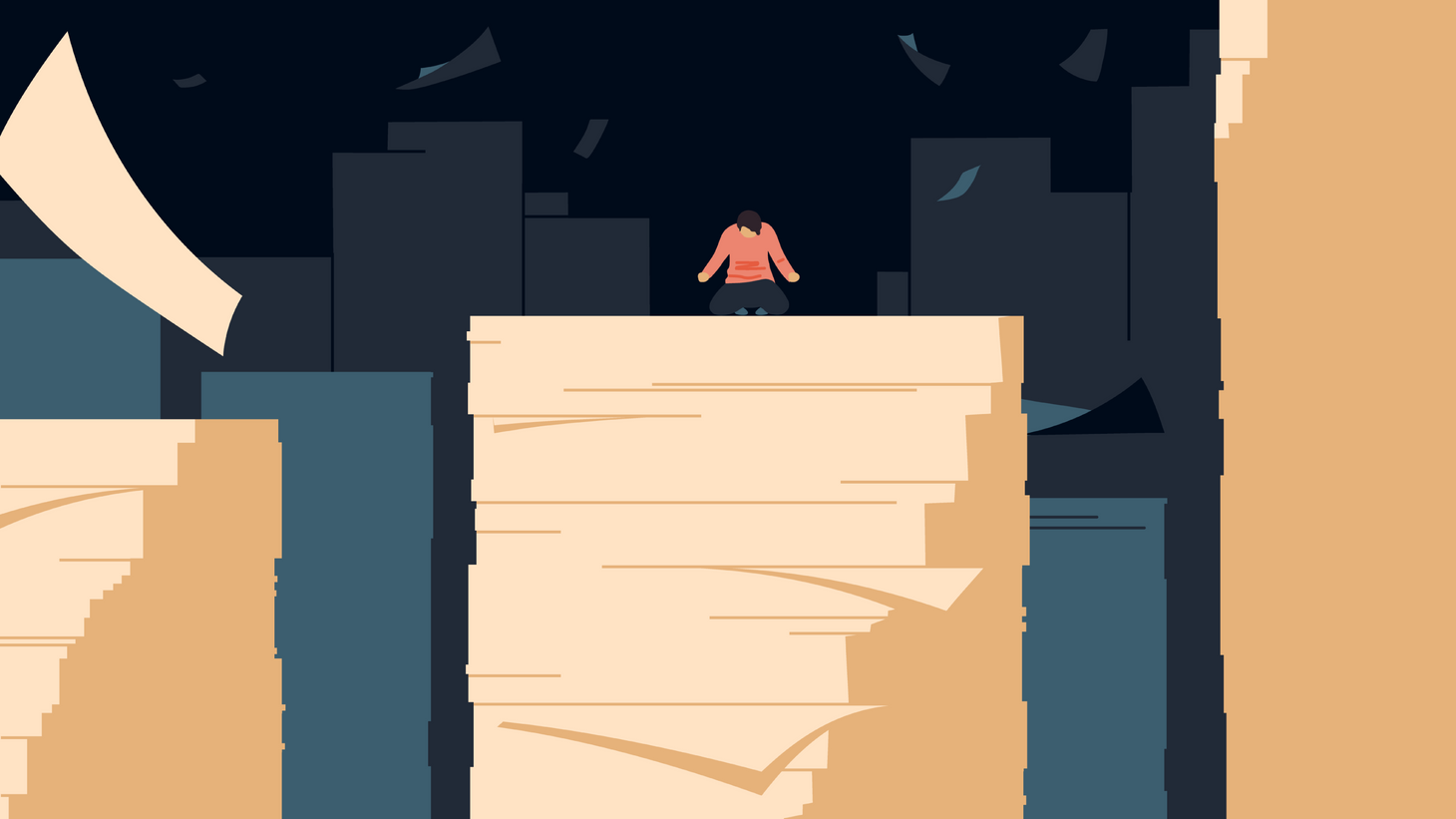
Hustle culture has trained an entire generation of founders to grind through the hard days. You know the script: when energy is low, motivation wanes, or creativity feels distant, the answer is to push harder. More hours. More willpower. More force.But here is what I have learned after founding multiple companies and coaching dozens of CEOs: grinding through those days kills the very thing that makes your best work possible—flow state productivity. That state where problems feel manageable, insights come naturally, and your work has momentum.This article is about how to stop grinding and learn how to get back into a flow state—even on the hardest days.
Hard Days Are Not a Character Flaw
I received the following email from a client this morning:
I think I'm dealing with a bit of random depression so I'm trying to get out of the funk.
One of the many gifts I have discovered in moving from founder CEO to coach has been the normalization of my own ups and downs.
Let me be clear: clinical depression is serious and should be treated with a therapist or psychiatrist. But the fleeting depression, anxiety, or low energy that most founders experience regularly? That's not a character flaw. It's your nervous system responding to uncertainty, sleep debt, or the unhealthy coupling of your worth to your company's outcomes.
The creation of something from nothing requires energy, motivation, and creativity. And each of those things can be fleeting. On the days when you find yourself low on any one of the three, trying to white-knuckle your way out of it is often counter-productive.
What your team, your company, and your own humanity needs most on those days is not more grind. What's needed is you back in the flow. And the way back is not pathed with force.
Flow State Productivity: Why Your Best Work Is Not "More Hours"
Think of the last time you felt close to a 10 at each. Fully energized, highly motivated, and steeped in creativity. How easy does your work come in those moments?
If you are anything like me, any problem feels manageable from that state. Challenges feel like opportunities. Writing or coding or pitching comes easily. You are in your groove.
Here is what changes when you are in flow state:
- Focus comes naturally—distractions bounce off
- Confidence is high—decisions feel clear
- Speed increases—you produce 3-5x faster
- Problems become puzzles—you feel capable
And when you are depleted?
- Threat response kicks in—everything feels harder than it is
- Procrastination increases—simple tasks feel daunting
- Catastrophizing loops start—you spiral on worst cases
- Output quality drops—what you create needs heavy revision
I have founded multiple companies, raised tens of millions of dollars, and built products used by hundreds of thousands of people.
And on some days, cleaning up the breakfast dishes feels daunting.
In my early years as a CEO, I would grind through the hard days.
Sometimes you must.
But if you are like me, you grind because that is how you have learned to operate. And you will reach a point where you find the grind no longer of service.
At that point, you may realize that what your team, your company, and your own humanity needs most is not more grind. What is needed is you back in the flow.
And the way back is not pathed with grind.
How to Get Back Into a Flow State (Without Forcing It)
As I read that email this morning from my client, I felt filled with compassion. I know those days very well. Where nothing is particularly wrong, but depression looms.
I responded with the following note:
What comes up if you turn to the depression with curiosity for a moment? Anything it has to say, or invite you to, or remind you of?
Why did I write that?
I could have told her I was sorry she was having a hard day. But I am not certain I am sorry for her.
Here is the method I have found most helpful for how to get back into flow
1. Pause and name the feeling
Low energy? Anxious? Disconnected? Frustrated? Just naming it reduces its power.
2. Ask 2-3 curiosity questions
What are you protecting me from? What do you need right now? What would feel restorative?
3. Pick the smallest restorative action
Walk outside. Nap for 20 minutes. Eat something nourishing. Call a friend. The action does not need to be grand—it needs to be kind.
4. Choose a "low-cognitive task" if work must happen
On depleted days, tackle admin, clear your inbox, or organize your to-do list. Save the creative problem-solving for when your energy returns.
When to stop working threshold
Simple rule: if you have slept less than 5 hours, are spiraling on worst-case scenarios, or feel high irritability, stop working. Your job in that moment is not output—it is recovery. Because the path to noticing, learning, or finding your next experience of high-energy flow is not to push through. It is to get curious about what you are experiencing.
For me, days of seemingly random depression are often a reminder from my mind or body to slow down and rest. If I approach that insight with trust, believing that the time of motivation and energy is around the corner and will return, I can carve out opportunity in the current moment to be gentle with myself.
Stop Grinding: Replace Hustle Culture With an "Artist" Operating System
In my early days as an entrepreneur, I viewed the task a lot like digging ditches. I thought the more hours the better and the more dirt I moved the more likely I would succeed.
There are certainly days of entrepreneurship that are like that. But most are not.
Most of the critical days of being a founder are about finding insights and creatively solving problems.
It is more art than ditch digging.
As I slowly began to see that my craft was more painter than ditch digger, I found myself over time getting very curious about how great artists work. One book that was very helpful in my exploration was Daily Rituals: How Artists Work by Mason Currey.
Daily operating system founders can copy
Here is the operating system I have built from studying how great artists work (and testing it with dozens of CEO clients):
Morning deep work block (7am-11am)
Protect 2-4 hours for your most creative, strategic work. No meetings. No email. This is when flow happens most naturally.
Midday walk or movement (11am-12pm)
Many of your hardest problems will solve themselves during a walk. Movement shifts your nervous system and unlocks insight.
Afternoon for meetings and admin (1pm-4pm)
Schedule calls, team check-ins, and reactive work in the afternoon when creative energy naturally dips.
Shutdown ritual (4pm-5pm)
Close open loops. Write tomorrow's top 3 priorities. Stop working. Your evening is for recovery—not grinding.
As I read through the book, I began to identify patterns on how the greats approached their craft. I found most do not grind. Most:
- Wake up early
- Create wide swaths of focus time
- Take frequent breaks and walks
- Finish their work day by mid-afternoon
- Work out their hard problems (or blocks) through long walks or time with friends
Perhaps most powerfully, great artists do not seem to grind when inspiration wanes or energy is low.
I love this quote from Zach Galifianakis:
Destroy the idea that you have to be constantly working or grinding in order to be successful. Embrace the concept that rest, recovery, and reflection are essential parts of the progress towards a successful and happy life.
What if we destroy the idea that you have to be constantly working or grinding in order to build a successful business?
What if we embrace the concept that rest, recovery, and reflection are essential parts of the progress toward a successful and happy company?
A Simple Recovery Plan for Founders
Clear 3-level recovery plan based on severity
If you find yourself overwhelmed with the grind today, here is a simple plan depending on where you are:
Level 1: Reset Today (for acute depletion)
Cancel what you can. Protect 2-3 hours for rest. Move only one meaningful thing forward today. That is enough.
Level 2: Rebuild This Week (for sustained low energy)
Protect your mornings for deep work. Stop non-essential commitments. Add one walk per day. Sleep 7+ hours. Let everything else wait.
Level 3: Recovery Month for burnout
You need real support. Find a coach or therapist. Build a sustainable weekly cadence. Delegate what drains you. This is not a sprint back—it is a slow return to flow.
A few questions I would invite you to consider (or journal) if you are in Level 1 or 2:
- How would your experience of your leadership role shift if you viewed yourself as a craftsman instead of a business person?
- How might you adjust your approach to the work day if you believed that rest, recovery, and reflection were essential to your job? (Hint: they are).
- What might you dare to try today to create just a bit more space in your day or to offer yourself a bit of care and compassion?
I write this with tremendous love and empathy. Leading is fucking hard. Particularly in times of tremendous uncertainty.
You are doing just fine. And you are not alone.
If you are experiencing the other side of burnout, know that there is a path back to yourself and to flow. It just does not look like more grinding.
What is hustle culture?
Hustle culture is the belief that constant work, long hours, and pushing through exhaustion are badges of honor and requirements for success. It celebrates grinding over rest, output over insight, and treats depletion as weakness. For founders, it is one of the most damaging myths we inherit—because our best work comes from flow, not force.
How do I stop grinding when deadlines exist?
Deadlines are real. But grinding through depletion rarely produces quality work—it produces work that needs revision. The smarter move: protect your morning for deep focus on the deadline work, delegate or delay non-essentials, and build in short recovery breaks (walks, naps). You will finish faster and better when you work with your energy, not against it.
How to get into a flow state?
Flow happens when you have energy, focus, and the right challenge level. To create it: (1) sleep 7+ hours, (2) protect 2-4 hour blocks of uninterrupted time in the morning, (3) eliminate distractions (phone off, no email), (4) work on something challenging but achievable. Flow is not something you force—it is something you create conditions for.
How to get back into flow after burnout?
After burnout, you cannot jump back into high output. Start with recovery: prioritize sleep, add walks, reduce your scope to 1-2 priorities per day. Rebuild your capacity slowly over weeks, not days. Work with a [LINK: coach or therapist] to identify what caused the burnout. Flow returns when your nervous system feels safe again—not when you push harder.
What if I feel random depression often?
If fleeting depression is happening regularly (multiple times per week), it may be your body signaling that something needs to change—sleep, pace, boundaries, or support structure. If it persists or deepens, please work with a therapist or psychiatrist. Depression is not a character flaw, and you do not have to navigate it alone. Sometimes the answer is not curiosity—it is professional care.
Does rest really improve productivity?
Yes. Rest is not the opposite of productivity—it is the foundation of it. Great artists, writers, and founders protect rest because they know their best insights come when their nervous system is calm. When you are depleted, you produce low-quality work that needs revision. When you are rested, you solve problems faster, make better decisions, and access creativity. Rest is not a luxury . It is strategy.
What is flow state productivity?
Flow state productivity is when you are working at your highest capacity with the least friction. Problems feel like puzzles. Decisions come easily. You produce 3-5x faster than normal. It is what happens when energy, motivation, and creativity align—and when your nervous system feels safe enough to focus deeply. This is the state hustle culture kills.
-Matt

Sanity Notes Newsletter
Join the newsletter to receive semi-weekly updates in your inbox.