Are You Feeling Guilty for Resting? Your Value Is Not Your Output
This time of isolation and slowness has me facing a lifelong message I carry: that my value is tied to my productivity. If I work hard and have output to show for it, I matter and deserve to exist. That message no longer serves me. It might not be serving you either.
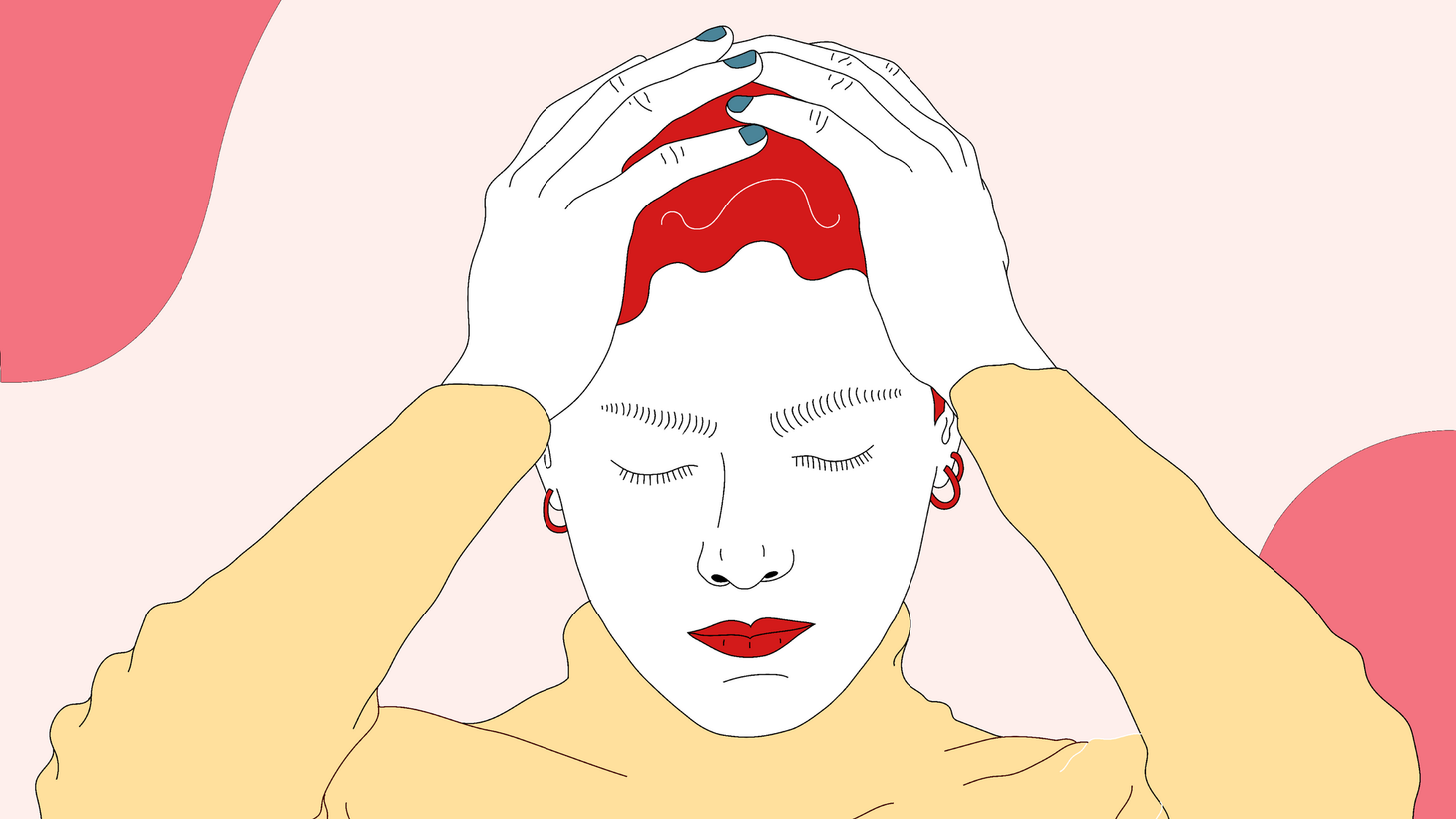
If you have ever felt restless on a slow day, anxious on a quiet weekend, or quietly ashamed for not being productive enough, this is for you. The guilt you feel when you rest is not a character flaw. It is a learned message, and for many founders and leaders, it has been running in the background for decades.
This time of isolation and slowness has me facing a lifelong message I carry: that my value is tied to my productivity. If I work hard and have output to show for it, I matter and deserve to exist. That message no longer serves me. It might not be serving you either.
The Setup
I don't remember how it began. I think it might have started in grade school where I felt like I never fit in. I was always the last to get picked for whatever sport we were playing on the playground. I can picture those moments in my mind as if they happened last week. And I can still feel the pit in my stomach and the weight on my shoulders as I watched every other kid get selected before me. I can remember the taunts of the kids who called me Fat Matt. They made fun of my clothes, my shoes, how slow I ran, even my family. I didn't fit in.
Like many smart misfits, I eventually found one area where I could carve out some recognition for myself. I was the smartest kid in the class. When it came to getting work done quickly or answering all the questions on the test correctly, I excelled.
By high school, this early taste of recognition for achievement had grown to a full-blown case of perfectionism. In my professional life, it wasn't enough to work for a great company; I had to be CEO. And it wasn't enough to start a small, profitable business, I needed to raise money from the world's best investors and drive disruption in our generation's most competitive industries.
All so I could fit in. Belong. Feel enough.
It's not a small thing to fit in. As humans, we are designed to desire belonging as a mechanism for safety and survival. We evolved to work together better than any other species, and we thrived through cooperation in tightly-knit tribes.
This drive to excel served me well in my life. Until it didn't. And that's how this stuff works.
This drive helped me to excel at school and sports. To get great jobs and start multiple businesses. But navigating founder burnout, as I've written about previously, that drive led to burn out and manifested a great deal of misalignment in my life and in my role as a leader.
Signs Your Self-Worth Is Tied to Productivity
Before going further, it helps to recognize the pattern. Here are some signs that your self-worth is tied to your output:
- You feel restless or vaguely anxious on days with no clear accomplishment
- Rest feels like something you have to earn, not something you deserve
- You judge your days primarily by how much you got done
- Slowing down triggers a quiet but persistent sense of dread or guilt
- You struggle to celebrate progress unless a goal is fully complete
If several of those land for you, you are not broken. You are living inside a story that was handed to you a long time ago.
Same Questions Different Crisis
These concerns bubble up in my own life and in coaching sessions with clients regularly.
For me, certain seasons force stillness. And I do not do still well. I remember long ago learning that sharks need to move to breathe. I don’t even know if that’s actually true, but I remember clinging to the idea because it felt true about me as well.
In my 20’s, I thought that was just my preferred way of living. I bounced around from country to country. Every weekend was an excuse to be someplace new. I now realize the constant movement was an effort at shielding myself from the questions that would arise when I slowed down.
Do I matter? Does my life matter? Am I valuable and worthwhile? Were those grade school kids right?
Being a CEO allowed me to largely hide from the heavy questions. I was so busy for most of those 7 years. When times of anxiety or worry came up, it was easy to attribute that worry to the business. If I was awake at 3 AM feeling anxious, my mind would quickly turn to the business and whatever fires or unknowns we were facing. A startup is actually quite convenient and useful for hiding from existential questions. It gives you an ever-present dilemma to which you can ascribe your feelings of fear and uncertainty
My life is different now. Yet these questions still remain. They remain so acute that when a client mentioned in a session this week that she too was questioning her own self-worth, my first reaction was to freeze. I asked myself in that moment if I was the right person to be coaching her in these questions given they are very present for me as well. As I took a moment in the session to ground myself, and to count a breath or two, I witnessed the awareness re-emerging that we /all/ hold these questions. They are very much at the root of what it means to be human. We want to know we belong. That we matter. That we have a place in the tribe and therefore that we are safe. These questions are hard-wired into the human experience.
How to Detach Your Self-Worth from Your Work
So what do we do with these questions? That was what my client wanted to know too.
And here, even as a coach who does this for a living, I have no easy answers.
What came to me in the coaching session was that the client might find it helpful to write a love letter to her younger self. I think this path felt worth exploring for a few reasons. The suggestion came from intuition not logic. But there is logic behind it.
The logic goes something like this. We must choose to either ascribe our value to what we are or else to what we do.
There is a rich history in our western culture of ascribing our value to what we do. There are a lot of variations of this. In our major religions, we are often judged based on our deeds. In our capitalistic culture, we are judged based on our wealth. Or by our possessions. Or by the behavior and education of our children. Or by the friends we keep. These are all different flavors of the same effort of finding our value in our actions.
This route is a dead end. I see it in my own life. I see it all around me. In my own life, I have achieved, earned, and experienced far more than I would have dreamed as a boy growing up in a small town in Michigan. And yet even now when I lean into trying to experience my worth through what I have done and earned, my search turns up empty.
I can wake up in my expensive house, kiss my beautiful wife, have breakfast with my wonderful son, climb in my brand new Tesla, and proceed to drive through Los Angeles feeling sorry for myself. Especially now when things are slow, when I don’t have a 50-hour per week job running a company to distract me, it’s easy to want to look around me at all I have achieved in order to feel something. And the truth is while at times I am able to feel gratitude for all that I have, and all the opportunity I have been given, it never gets the job done of letting me feel like I am a good human. Like I belong, like I am safe, like I am worthy of love and a place in this world.
So there needs to be another route. Another source.
If we write off our achievements as a source of worth, there is really only one other place to look. We must explore whether we are inherently valuable.
Are we born valuable? Whole? Worthy of love? Worthy of our place?
As a child, before the world got to me in the form of those kids on the playground, I do not remember ever questioning my worth. And that’s interesting to me.
When I became a parent, when I held my baby son for the first time, I experienced the most visceral awareness of human value that I have ever known.
I love him completely. Entirely. Just because he is. He does not have to do anything whatsoever for me to find him worthy of his place in the world. He is worthy because he is.
And therein I believe is the secret to our real value. This is something I explore more in my posts on self-value and productivity and why leaders must own our own sense of worth.
Practical Steps to Stop Feeling Guilty for Resting
Understanding this intellectually is one thing. Living it is another. Here are a few practices that have helped me and the leaders I work with:
- Write a love letter to your younger self. Before the playground, before achievement, that child was whole. The exercise is simple and often surprisingly powerful.
- Notice the guilt without obeying it. When you rest and the guilt shows up, name it. "There is that feeling again." You do not have to earn your way back to stillness.
- Reframe rest as strategy. Rest is what makes your best thinking possible. I have written more about this in my post on why CEOs should work 40-hour weeks.
- Seek community. Isolation amplifies the inner critic. When you share these feelings with people who understand, the shame starts to soften. You can read more about making friends as a founder if this resonates.
The Invitation
The exercise that arose in our session of writing a love letter to one’s younger self is an opportunity to see the value that was in that child before she or he ever achieved anything of note. When that child simply /existed/ in the world.
Beginning this exploration does not immediately fix the issue. Acquiescing intellectually to our own inherent value will not silence the negative thoughts. The invitation is not to fix. The invitation that arose for my client, and that I also find myself exploring in this time of slow, is to reconnect with what we knew and experienced of our own value before we were ever told differently. Why doesn’t a child question her place in the world? Why doesn’t a child need to be told her opinion matters or that she’s worthy of love or attention?
The awareness of our own value is our inheritance and our mother tongue. We are born with it. It is there in each of us.
So where then is the opportunity for you and me today? How might we use this time of slow to reconnect with the inner child of each of us who knew exactly what to do with still and slow. Who knew without question that she was valuable. Would would it look like for you to reconnect today?
Wherever you find yourself as you read this today, sending you love and well-wishing for your own reconnection. My answers for myself aren’t easy today either. But none of us are alone in the search.
-Matt
Frequently Asked Questions About Rest, Guilt, and Self-Worth for Founders
Common questions founders ask about rest, burnout, and the relationship between productivity and self-worth.
Why do I feel guilty when I rest, even when I am exhausted?
Guilt about resting is almost always tied to a belief that your worth depends on your output. If somewhere along the way you learned that achievement earned you love, safety, or belonging, then stopping will trigger that old alarm system. The guilt is a learned response, not a truth about who you are.
Is feeling guilty for resting a sign of burnout?
It can be. When rest consistently feels impossible or guilt-inducing even when you are depleted, it is worth paying attention to. You can read more about what that pattern looks like in my post on founder burnout.
How do you detach self-worth from productivity without losing motivation?
This is a fear many high achievers have. The truth is that most people doing meaningful work are driven by curiosity and purpose, not just fear of being worthless. When you stop working from fear, you do not stop working. You start working differently, and usually better.
What is the first step to stop tying self-worth to work?
Start by noticing. When the guilt of resting shows up, name it without judgment. Awareness is the beginning of change. From there, practices like journaling, coaching, and intentional rest can help you slowly build a different relationship with your own worth.

Sanity Notes Newsletter
Join the newsletter to receive semi-weekly updates in your inbox.