How to Get Your First Customers So Your Company Doesn’t Die
Our company almost died in 2015. Most B2B companies with good products struggle because they don’t find predictable, scalable methods of acquiring customers. If you’re exploring a sales-driven acquisition strategy, here’s how to test, validate, and scale your engine. Because death sucks.

My company almost died in 2015. Most B2B companies with good products struggle because they don’t find predictable, scalable methods of acquiring customers. If you’re exploring a sales-driven acquisition strategy, here’s how to test, validate, and scale your engine. Because death sucks.
This is a rough, practical go-to-market plan for how to get customers: first your first customers, then your first 10 customers, then a repeatable B2B client acquisition engine. There’s no perfect map. But there are reliable practices you can test.
Note: this is a rough sketch of a B2B go-to-market plan. Use this to light up your understanding and brainstorming. But know there’s no perfect treasure map and actual mileage will vary.
In 2015, Twenty20 was almost dead. We’d raised an $8M Series A, burned too much building, and hit a wall. Revenue had stopped. $0 ARR.
We’d also hired too senior, too early. Great resumes. Wrong stage experience. They didn’t know how to get the first 10 customers.
We’d spent the better part of a year converting our our product from Instacanvas (sell your Instagram photos as wall art) to Twenty20 (sell your mobile photos as stock imagery). And we had a beautiful product we believed could disrupt the stock photo market. But we had precisely zero paying customers to show for it.
My head of growth and I spent a day volunteering at a startup event at a local state college. We split up for the afternoon and each spent time with different would-be startup teams helping them figure out how to talk to prospective customers effectively in order to validate their product hypotheses.
On the car-ride back, it became immediately clear we’d both arrived at the same conclusion.
These students were doing customer validation better than we were. That’s when it clicked: we didn’t know our target customers well enough.
Back at the office, we put together a plan to lean out the team, get back to basics, and get on the phone with as many prospective customers as we could.
Within a year, we’d scaled from zero to hundreds of customers, zero to 25+ sales people, and $0 to ~ $1.5M in ARR.
There’s no perfect playbook, everything is market, product, and situation dependent. But there are some practices here that might help you sort out what to test and how to test it for your own specific company situation.
The ordering is malleable; none of this is gospel.
The Fast Version: How to Get Customers in 30 Days
If you want a simple plan to get your first customers fast, use this. It’s not magic. It’s focus + volume + learning.
Week 1: Pick your segment
- Define one ICP (industry + role + company size)
- Build a list of 50 target accounts
- Book 10 customer calls (research calls, not sales pitches)
Week 2: Validate the pain
- Run calls daily
- Tighten the problem statement
- Recruit 5–10 alpha users who “want this badly”
Week 3: Sell a pilot
- Offer a paid pilot or beta
- Collect proof (quotes, before/after)
- Write the first case study draft
Week 4: Start repeatability
- Pick 1–2 lead channels to test
- Launch a simple outreach cadence
- Track reply rate, meetings booked, and closes
Before You Scale: What You’re Actually Building
Your goal isn’t “more leads.” Your goal is a small group of customers who get real value, and a repeatable way to find more like them.
Here’s the order that works in most B2B startups:
Step 1: Get Your First Customers by Building with 8–10 Alpha Users
I’m a big believer in the Lean Startup model. There are no shortcuts for mapping and validating your early assumptions about your business. If you’re new to Lean, start there. The key point: your early job is learning, not scaling.
Through your early practice of Lean, you will do (or did do) a lot of talking to prospective customers. Part of that exploration, if done right, will be some kind of ‘give a shit’ hypothesis. That is, ‘who out there will actually give a shit if we build this.’ Many companies never get past this point.
If you’ve zeroed in on a product people at least tell you they would use, and maybe even claim they’d pay for, you have an interesting starting point.
For the purposes of this post, I’m going to zero in on B2B software, but the same principles can be loosely applied to D2C or other products.
If you’ve managed to get people’s heads nodding, group together 8-10 of such people and make them your alpha customers. People who tell you they want what you plan to build and who agree to be involved in the process.
You might even tell them you will charge them nothing for now but would love if they’d pay if you build a solution they find helpful.
Ideally, you want to build your product in their offices with the end users seeing frequent iterations of what you’re building.
Study their workflows, study what they currently use instead, and weave their feedback deeply into your product.
Practical checklist for alpha customers:
- They have the problem weekly (not “someday”)
- They feel the pain today (not theoretical)
- They can access the buyer (or are the buyer)
- They’re willing to meet repeatedly
- They’ll introduce you to 2–3 peers if it works
If you take this approach, when you’re ready to soft-launch your product, you hopefully have converted most of those 8-10 alpha customers to paying beta customers. If none if them will pay you for what you’ve built, ask them why. Then rinse and repeat.
Step 2: Segment Your Target Market to Find the Right B2B Customers
There’s an argument for doing some marketing and end user segmentation before you even build, and I could go either way on this. But if you’re focused on giving value to 10 alpha customers (not just one or two), there’s a decent chance your product appeal is wide enough for early go-to-market.
Now that you have your first 5-10 customers, the task at hand is to understand clearly :
- what portion of the market you can best serve with this V1
- who the end users are
- how to price and package for early adopters
- how you might reach them predictably and cost-effectively
Leverage your understanding of the market, your experience from previous customer conversations, and any other data you feel helpful to segment out your market. Next, within each segment, identify customer segments. This is a great place to begin building and iterating on key customer personas.
Keep personas simple at first. You want clarity, not a PDF.
Persona starter (1 paragraph each):
- Role + responsibilities
- Top 2 pains related to your product
- What triggers a buying moment
- How they evaluate solutions
- Who else is involved in the decision
Step 3: Talk to 100+ Prospective Customers (and What to Ask)
At Twenty20, in the story above, this was when we went back to basics and hit the phones. We had a V1 product that we believed was ready for early use. While we’d build with feedback from would-be customers as advised above, we weren’t rigorous enough in ensuring we were building something those customers would actually pay for. So we actually had to go back and overhaul the product with feedback from this second more major round of customer outreach. If you stay closer to your alpha customers, you hopefully already have some paying reference customers at this point.
I’m a believer at this early of a stage that your whole team should be on the phone with prospective customers. Create a place to share all learnings from every call. A Google Doc will do.
The goal here is to begin to explore which of the market segments you’ve identified might be early adopters of your product in its current state. And whom within those customers will be making buying decisions and whom will be the end product users.
Six questions that make these calls useful:
- Walk me through how you handle this today.
- Where does it break? What’s the cost of that?
- What have you tried already? Why didn’t it work?
- Who feels this pain most: end user or leadership?
- If this problem disappeared, what would that be worth?
- Who would need to approve buying something like this?
How to Find 100+ Prospective Customers
How do you find 100+ customers to talk to? This is where hustle and grit come in. If you already have a network in the target market, use that. If you don’t, InMail on LinkedIn can be a helpful place to start. Be sure to note you are a founder (or early startup employee, etc.) who is looking for product feedback. You’re not looking to make a sale, at least not yet.
If you don't have a strong network in your target market yet, the best shortcut here is to go and find 2-3 advisors who do. You may have done this before building any version of your product (hopefully!) but if not now is a great time.
Go find well-connected influencers in your market, people who were senior execs at larger companies or who are currently, or were previously, target end users who now speak or write about trends in their space. These types of advisors are amazing to have on your team because if you recruit one of them they might bring 100+ introductions with them. Advisors can compress time because they bring distribution: intros, credibility, and pattern recognition.
Step 4: Hone In on Your Early Adopters
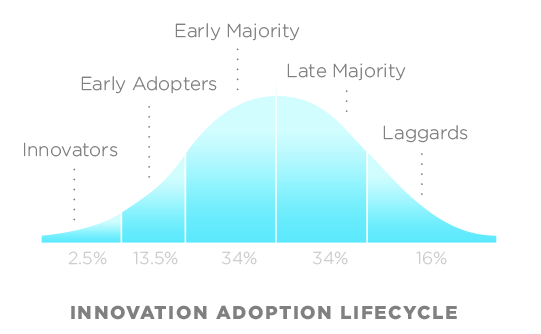
Once you’ve validated through conversations with 100+ prospective customers , hone in on the part of the market and the end users you feel will make the easiest early adopters of your product. Early adopters usually share three traits: urgency, budget, and a clear owner.
Quick early-adopter filter:
- They have the pain now (not “eventually”)
- They’ve tried to solve it before
- They can approve spending (or have direct access to the buyer)
Step 5: Go Sell 10 Customers (Don’t Try to Scale Yet)
If you don’t yet have your first 10 customers, now’s the time. You should be laser focused on the market segment and key early adopters you want to go after. You may have even sold a couple by accident in your early customer outreach. Now’s the time to go back to the ones where there was a strong connect and ask them if they’ll buy.
Don’t worry about doing things here that scale. There will be at time (below) for building out the predictable, scalable sales engine. For now, you just want to (or need to) hustle.
Sell them at whatever price point you can get them to pay. What you want is active customers using the product.
What you’re really selling in the first 10:
- A clear outcome
- A small scope
- Fast time-to-value
- A simple price that’s easy to say “yes” to
Pause for important message: I’ll hammer on this a few times, but please please please never let your focus on acquisition and scale (the heart of this post) detract from your determination to please, surprise and delight your customers. No acquisition strategy can substitute building something people love and taking incredible care of those people, especially your earliest customers.
Step 6: Validate 2–3 Lead Channels to Get Customers Predictably
Now that you HAVE your first 10 customers, it’s time to begin to think about how to predictably source leads. Bonus points if you’ve already laid a foundation for content marketing, thought leadership, etc, but no stress if you haven’t.
You now have a product being used (and hopefully loved) by a handful of customers. That’s awesome. That’s the spark we’ve been looking and hoping for. Now it’s time to learn about how to pour fuel on that fire.
To begin to learn about acquisition channels, start with brainstorming. Get a few people in a room and build a massive list of all the crazy ways you might acquire customers.
Then have each person apply a score:
- a score (1-5) of how likely they think each idea is to work
- a second score (1-5) of how big the channel could be if it works
I like to have people score blind to others’ scores so they aren’t biased. Average all the first scores and all the second, then for each idea multiple the averaged first and second score.
Order them highest to lowest. Go invalidate one channel at a time (or 2-3 if you have the bandwidth) until you hit on 2-3 that can predictably drive sales leads for you.
Your funnel might look something like:
Google ad > landing page > email capture > sales call.
Getting the funnel perfect at this stage isn’t critical; what your’e looking for is signal.
For example, if your current pricing gives you an average annual contract value of ~ $5k, you’re looking for channels that can drive leads for < $500 apiece (assuming you can close 10% and can tolerate a 1-year payback period). Appetite for risk on payback will vary by your capital situation and a myriad of other factors.
Channel validation metrics (keep it simple):
- Reply rate (outreach)
- Meeting booked rate
- Close rate
- CAC and payback (rough is fine early)
Step 7: Obsess About NPS, Retention, and LTV
I’m going to waive the flag again here on customer obsession. Throughout your effort at finding and scaling your go-to-market, you need to be carefully studying your customers’ experience with the product. Are they happy? Is usage and revenue growing on a cohort basis? Are they sticking around? If they aren’t, halt all growth efforts and go figure out why. If they are happy, ask them for quotes and case studies and use these as early collateral for your sales team.
This is also when referrals start to show up. Great early customers often know other great early customers.
Step 8: Hire 2 Sales People (and Why You Should Manage Them Yourself)
Now that you have a handful of happy customers and an idea of how to fill the top of your sales funnel with leads, it’s time to get some help with your selling.
Hopefully until now the founders or other company leaders have been selling. Now we can begin to specialize a bit and experiment with bringing in some hired guns.
Always hire salespeople in pairs. If you only hire one, and they don’t hit targets, you never know if the problem is with the sales person or the system around them.
These two salespeople should generally report directly to the founding CEO. I’m a believer that the CEO should always do every senior role she wants to hire for before actually hiring for it. Yes, she will generally do a worse job than a VP of X, but she’ll learn the job and be able to more effectively hire for it. In the case here, she’ll need to be hands on with the first two salespeople because together they’ll be building the V1 of the full sales process.
The goal here is to get two sales reps hitting a quota that keeps your cost of acquiring customers low enough that you can tolerate the payback period. You’ll need to do the foundational work to support those reps, but it doesn’t need to be a polished version of that work. Your first VP of Sales can do that. For now, use the CRM, lead management stack, sales collateral, email systems, etc, that will get you learning as fast as possible with those two reps.
Once you are able to get two reps selling at quota predictably, which may take several months, you’re ready to hire your first VP of Sales.
Step 9: Hire Your First VP of Sales
You may be reticent to spend money hiring a VP of Sales (or sales leader) this early in the game, but in my opinion the costs of not making this hire early are much higher. An entire book could be dedicated to how to hire sales leadership, for our purposes here I’ll simply share that now is the right time to consider doing so.
Much the way you want your VP of Engineering to be able to hire her own team (aside from perhaps the early founding engineers), you want your VP of Sales to be able to build out the sales processes, materials, team dynamic, etc. as she sees fit. A great VP of Sales will also lead or partner on building the right tools and processes around your sales system.
Once your VP of Sales has the two reps still cranking under V1 of the sales system she’s implemented, she can begin adding reps in pairs (while carefully monitoring the time and success rate of getting new reps up to quota such that payback periods are maintained.)
Step 10: Lock Down Your Financial Model (Raise $ if Needed)
The intensity with which you press the acceleration here will be dictated by a lot of variables including your cash position and your board’s tolerance for risk. I’ve written at length about my own failings at Twenty20 in pushing the sales efforts too hard too early. Please learn from my mistakes here and ensure you thoughtfully approach scale.
Things to think about:
• Ensure our financial model is solid and under the control or guidance of an experienced CFO or advisor.
• Build check-in points into the financial model and sales hiring plan so that you aren’t caught with no plan if growth slows (align on these check-in points with the board and leadership team)
• Identify clear targets for where sales needs to go for your next milestone and ensure all your brightest minds are exploring openly how to keep the company supported and healthy as you grow toward that milestone
Step 11: Invest in Culture Early and Often
If you started, as most software companies do, with mainly engineers and product folks on your team, adding sales people is going to have a big impact on the culture. The Internet is full of cautionary tales of this evolution gone awry .
Building an effective company culture is always challenging. Building a cohesive culture that includes engineers and salespeople cranks up the game to level 10. This should be a topic of frequent, open conversation for the leadership team, the board, and the entire company. There are no shortcuts.
What to Say When You Reach Out to Prospective Customers
This is where most founders freeze. Use simple messages. The job is a conversation, not a pitch.
Message 1: customer research ask
“Hey [Name] — I’m a founder working on [problem]. I’m not selling you anything. I’m trying to understand how teams like yours handle [workflow] today. Could I ask you 3–4 questions on a quick 15-min call?”
Message 2: follow-up
“Just bumping this in case it got buried. Still would value your perspective on how you handle [problem]. If now’s not a good time, no stress.”
Message 3: pilot offer
“Based on what you shared, I think we can help you [outcome]. I’m offering a small pilot with 2-week implementation and weekly check-ins. If it works, great. If not, we’ll part as friends.”
Common Mistakes When Trying to Get Your First Customers
- Targeting everyone instead of one clear segment
- Building too much before validating willingness to pay
- Confusing “interest” with “commitment”
- Not following up enough (most wins happen on follow-ups)
- Hiring senior sales too early instead of learning the system first
- Scaling acquisition while retention is weak
Final Thoughts
There’s no foolproof map to finding your early customers. And certainly not to scaling the effort.
There’s a reason why most companies never find passionate customers, or never figure out how to predictably scale; it’s hard. Most flame out along the way.
Taking a thoughtful, methodical approach will increase your odds of success. This stuff is difficult, but not rocket science.
Spend a ton of time with prospects and customers.
Share challenges openly with your team and board.
Obsess about customer experience and feedback.
Rest, meditate, exercise, and take vacations. This is a marathon not a sprint.
Oh, and find a good coach. :-)
Wishing you peace on your own journey today,
Matt

Sanity Notes Newsletter
Join the newsletter to receive semi-weekly updates in your inbox.