How to Get Your Creativity Back as an Entrepreneur ?
A few months ago, I was walking into my office and felt overwhelmed with a sense of anxiety and dread. A realization hit me. The building that was supposed to be my ‘place’ for creative work had become anything but. 7 years in, I’d lost the creative spark of my work entirely. And I wanted it back.
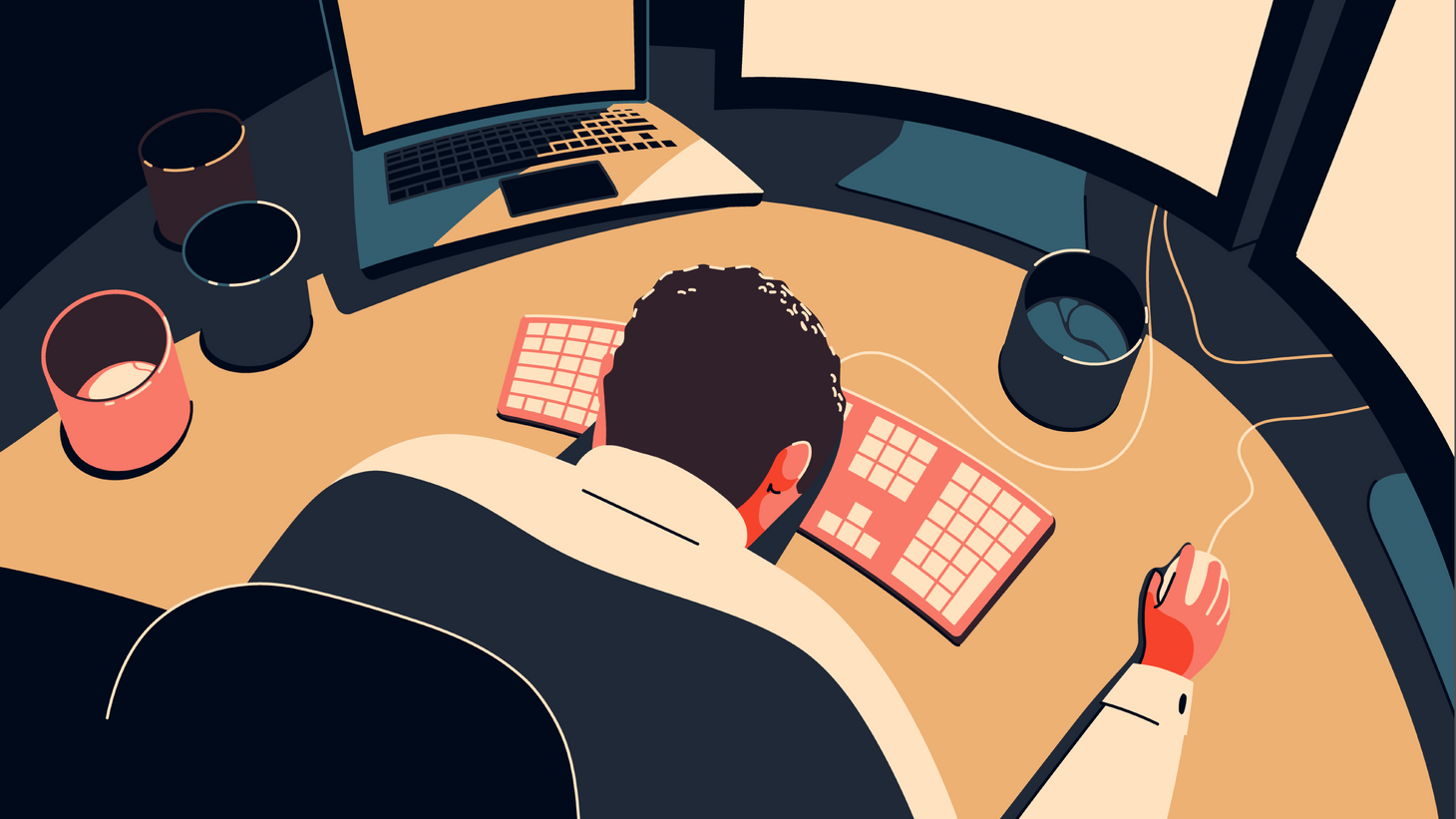
A few months ago, I was walking into my office and felt overwhelmed with a sense of anxiety and dread. A realization hit me. The building that was supposed to be my ‘place’ for creative work had become anything but. 7 years in, I’d lost the creative spark of my work entirely. And I wanted it back.
If you’re searching how to get your creativity back, how to be more creative, or how to stop feeling stuck, this is what I noticed in myself—and what I changed.
When Your Office Stops Being a Creative Place
So many of the reasons I started a company in the first place have since fallen by they wayside. Some for the better (getting rich and famous) and some for the worse (working with my friends.) But recently, I realized I’d lost something whose importance I’d failed to understand until it was gone. My desire and ability to create.
In hindsight, I can see I start businesses in large part for the creative endeavor. I love seeing something created from nothing. I love imagining with other bright people ways the world could be different. I even love the often painful process of iterating through an early idea as pieces of the model fail and must be re-imagined.
As we’ve worked to scale Twenty20 these past few years, I realized recently I’ve failed to protect that creative space for myself. Or, perhaps more accurately, I’ve forgone it entirely. Shoved it aside for the more important work of a CEO.
There’s no part of my day or week set aside for creative endeavor.
I’ve built my responsibilities around operations: finance, planning, staffing, capital, corp dev.But the fun stuff, the customer conversations, debates on product vision, the exploration of how to build a legacy brand, and many other of the creative elements of business building…I’ve delegated these things to others. Much of that delegation is necessary, no doubt, and most of that work is now in the hands of more talented people. But, as a founder, to let go entirely of the creative work of building one’s product and company. I realize now, that’s been a mistake.
The office has become a place of tasks to be done and fires to be put out. I feel I’m living my weeks a slave to my to-do list app. There’s no time or space for creativity. And part of me is shriveled up, threatening to die.
What I delegated that quietly killed my creative life:
- Customer conversations and field learning
- Debates on product vision and direction
- Brand exploration and storytelling
- Time to sit with uncertainty and imagine
Why Entrepreneurs Lose Creativity (and Motivation)
This didn’t happen because I “stopped being creative.” It happened because the system of my days stopped supporting creativity.
Common reasons entrepreneurs feel stuck:
- Constant context switching (meetings, Slack, fires)
- Reactive work crowds out deep work
- Pressure to be “useful” every minute
- No protected space to think
- Delegating all creative decisions to others
When that goes on long enough, you don’t just lose creativity. You lose motivation. Everything starts to feel like maintenance.
How to Get Your Creativity Back: Two Changes That Worked for Me
So I’ve begun experimenting with finding my way back to letting the office be a place of creativity for me.
Change 1: Create a Protected Creative Space (Even If It Feels Selfish)
So I’ve begun experimenting with finding my way back to letting the office be a place of creativity for me. I started by doing something that was quite difficult to me. I turned one of our conference rooms into a private office for myself. I did this because I realized as a founding CEO I have a tremendously hard time separating my own mental space from whatever is going on in the team. Sitting on the floor all day every day, while nice from a meritocracy perspective, was destructive to my own creative space. And I decided I needed to be ‘selfish’ and create some space for myself. A room where I could close a door, turn on some music, and do creative work.
What makes a “creative space” actually work (simple rules):
- A door you can close
- One task at a time (no tabs zoo)
- Music or silence you control
- No meetings scheduled inside that block
Change 2: Start Writing Again (and Use It to Find Motivation)
I’m also back to writing. Writing is one of the magical intersections for me where something that fuels me creatively, and psychologically, is of great benefit to the business.
Writing helps on multiple levels:
- It clarifies my thinking as a leader
- It helps me process the emotions of startup life
- It gives my team visibility into my thinking (CEO and human)
- It improves external relationships (warmer inbound partnerships)
The Hard Part: Creativity Never Feels Urgent
All those things being so, it’s so damn hard to prioritize time to write. It never feels like the most important thing on my to-do list. So it get’s pushed to the bottom. And months go by where I don’t write. That’s the trap: creative work is rarely urgent, but it’s often the work that makes the rest of the work worth doing.
The Habit: How I’m Making Creativity Non-Negotiable
Thus, starting this week, I’m trying something new. I’m blocking time each day to write. I’m drawing a line in the sand and prioritizing a habit and craft that I know is good for me, good for my team, and good for our business.
My current rule:
Block the creative work first. Let everything else fight for what’s left.
Curious if I can make writing an active, daily part of my life as a CEO. Excited to be doing so today, in my cozy little second floor office.
If You Feel Stuck Today: 10-Minute Ways to Get Unstuck
If you’re feeling stuck right now, don’t “wait for inspiration.” Do one small rep. Ten minutes is enough to restart motion.
- Set a timer for 10 minutes and write 10 bad sentences
- Change rooms (or go outside) and walk without your phone
- Write down the one problem you’re avoiding, then list 5 angles on it
- Pick one constraint: “one page,” “one idea,” “one paragraph”
A 7-Day Plan to Be More Creative as an Entrepreneur
Thanks for reading that writing!
Matt

Sanity Notes Newsletter
Join the newsletter to receive semi-weekly updates in your inbox.